Marketing
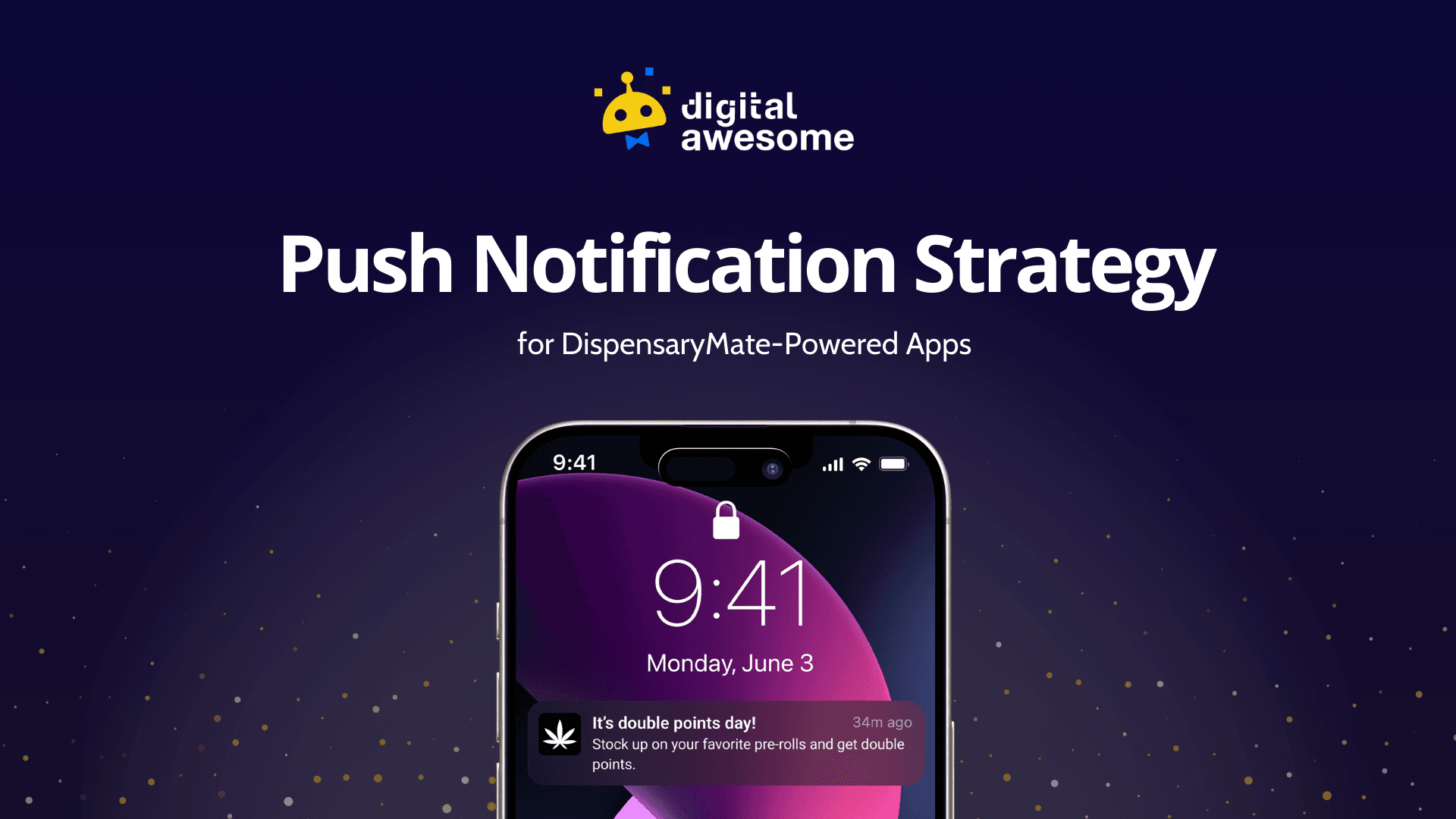
Push Notification Strategy for DispensaryMate Apps
Posted by: Digital Awesome
May 08, 2025
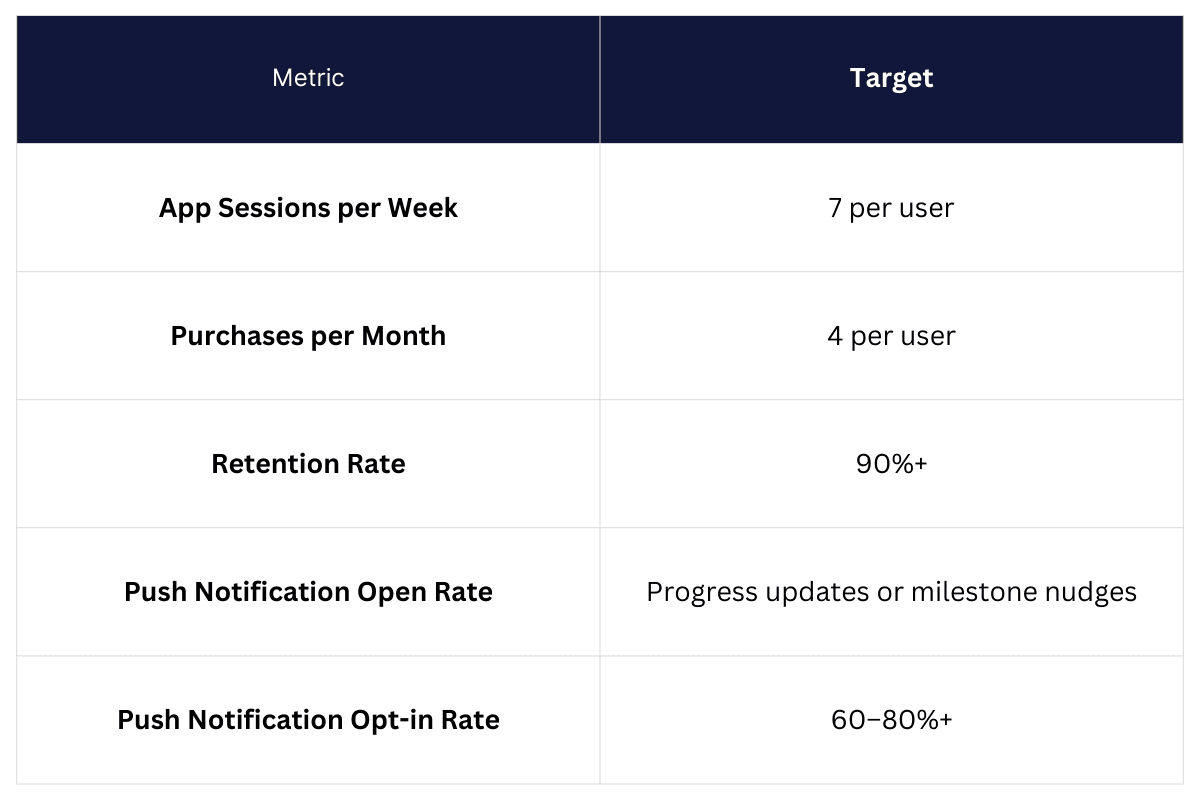
Digital Awesome’s DispensaryMate platform is built for big results—think seven sessions per user each week, four purchases per month, over 90% retention, and a sky‑high opt‑in rate for pushes. To hit those numbers, your notifications must be intentional, targeted, and performance‑driven—not just frequent.
Because let’s be real: push fatigue is more common than we think, and bombarding users can actually drive them away.
Recommended Push Frequency
If you’re just getting started or have a small audience, ease in with 2 to 4 pushes per week. This pace lets you learn what resonates and build trust before turning things up.
For high‑engagement apps aiming for daily habits (7 sessions/week), you can ramp up to 5 to 7 pushes per week—but only if you:
- Segment your audience
Some examples of segmentation parameters may include first‑time buyers vs. repeat customers; VIPs vs. lapsed users, fans of edibles, vapes, or flowers and users who haven’t purchased in the past 30 or 60 days.
- Vary your message types
Your push notifications should mix promotional offers—like flash sales, limited‑time bundles, or ongoing deals—with engaging content such as a “Budtender tip of the day,” collaboration announcements, or review requests, and timely alerts including restock notifications based on past purchases, new product drops, and store announcements.
- Track conversions, not just opens
Measure promo clicks, add‑to‑cart to checkout rates, and actual revenue from each campaign. Then double down on the messages that drive real orders.
Timing is Key
Finding the perfect send time can boost opens and conversions—here’s how to nail it:
- Start with Industry Benchmarks
Most retailers see peak engagement between 4 PM and 7 PM, when people wind down and check their phones. Use that as a baseline for your first test.
- Dive into Your Data with Mixpanel
Analyze session times: Pull a report on the hours when users launch the app. Do they tend to browse mid‑morning, lunch hour, or late at night?
Examine purchase timestamps: Overlay order times to see when they’re most likely to complete a transaction. That’s your sweet spot for promotional pushes.
- Identify Your Unique Peaks
Look for patterns by day of week as well as hour. You might discover that Fridays at 3 PM drive more orders than Tuesdays at 5 PM, for example.
- Segment by User Type
New users often engage best with an evening welcome series, repeat customers tend to appreciate midday restock reminders, and VIP shoppers respond well to weekends versus weekday blasts for early‑access deals.
- Set Up A/B Tests for Time Slots
To pinpoint your optimal sending time, split your list into three randomized segments and send identical messages at 2–4 PM, 6–8 PM and 8–10 PM. Track each segment’s open, click‑through and order rates; then roll out the full campaign during the time slot that outperforms the others.
- Automate & Iterate
Once you’ve identified top performers, schedule pushes for those slots by segment. Re‑run analysis every month because seasonal changes or new user cohorts can shift your best times.
- Watch for Overlap & Fatigue
If a user receives multiple timely messages (e.g., an order alert plus a promo), space them out by at least a few hours. Monitor opt‑outs or dips in open rate after changing send times and adjust if fatigue kicks in.
By leaning on real user data, testing thoughtfully and tailoring send times by segment, you’ll ensure your push notifications hit when they matter most so you maximize engagement without annoying your audience.
What Performance Metrics to Monitor
The goal is not just high open rates. You must track:
- Push sent → delivered → opened → purchase
- Revenue per notification
- Which types of pushes lead to real conversions
Notification Content Mix Strategy
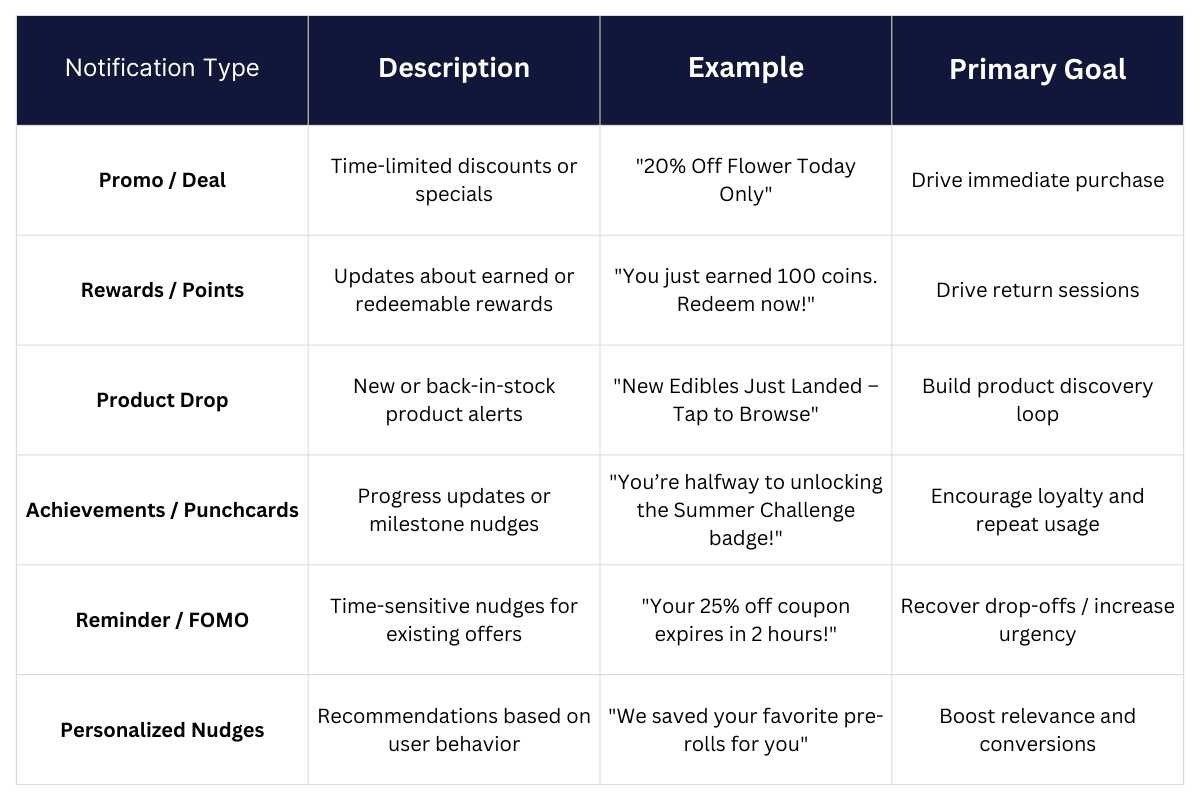
Push fatigue is real. A balanced mix of content avoids user blindness and improves the impact of promotions when they land. If every push is a discount, people start tuning them out. Mix in achievement progress, reminders, rewards, and personalized nudges to stay relevant.
Segmentation Strategy
Push performance spikes when messages feel personal and relevant. To make that happen, segment your users by key behaviors and attributes:
- Store location: Target pushes based on each user’s favorite dispensary.
- Purchase behavior: Group by last order date, product categories bought, or time since last purchase (30‑ or 60‑day lapsed).
- Loyalty tier: Tailor messages to reward balance or VIP status.
- Engagement level: Differentiate daily active users from dormant ones.
Even basic segmentation like calling someone by name or referencing their go‑to products can double engagement and drive higher conversions.
Engagement Benchmarks to Aim For
Testing Tips
Use Mixpanel to continuously A/B test and optimize every element of your pushes:
- Message style: Vary copy and tone (emojis vs. plain text).
- Send time: Test timing by segment.
- Offer structure: Compare discounts, rewards, and achievement-based promos.
- Downstream impact: Track not just opens and clicks, but product views, cart adds, and completed orders.
Push notifications aren’t just for re‑engagement—they’re your most powerful lever for predictable revenue.
Bonus Tip
Use Scarcity Messaging that Converts
Scarcity messaging taps into FOMO (fear of missing out) by combining urgency with social proof, making offers feel limited and highly desirable. Here’s how to do it effectively:
- Highlight Remaining Inventory:
“Only 20 bonus pre‑rolls left today—don’t miss out!” tells users exactly how much time-sensitive stock is available, prompting quicker decisions.
-Include a Timeframe:
Add a deadline to increase pressure: “Ends in 3 hours!” or “Sale wraps up at midnight!” works wonders alongside low‑stock alerts.
- Show Social Proof:
Pair scarcity with social cues: “Over 100 customers bought this in the last hour!” reinforces popularity and trust.
- Rotate Scarcity Offers:
Don’t rely on one static message. Cycle through different scarcity angles, limited stock, expiring reward points, time‑bound VIP access to keep your audience engaged without numbing them to the tactic.
Used thoughtfully, scarcity messaging can accelerate conversions and turn casual browsers into committed buyers—just be careful not to overuse it or the urgency will lose its power.