Choosing a Cannabis Dispensary POS System? Compare Your Options First
Picking a cannabis POS system is not a decision you want to make twice. Between compliance requirements, inventory tracking, and the day to day realities of running a dispensary, the wrong choice costs more than money. It costs staff hours, customer trust, and time you cannot get back.
This guide breaks down what actually matters when comparing cannabis POS systems, what hardware you genuinely need versus what you do not, and how the top providers, Treez, Dutchie, Jane, Flowhub, Meadow, and POSaBit, stack up against each other. If you are also weighing whether a POS switch means losing app features you already rely on, that is covered here too.
TL;DR Quick Answers
- Best for compliance-heavy states: Look for a POS with built-in seed-to-sale tracking integration (Metrc, BioTrack, or your state's required system), not a bolt-on.
- Best for multi-location dispensaries: Prioritize centralized inventory and reporting across stores, not just per-location tracking. Operators running 8 to 11 stores on a single unified app have done this successfully, more in Section 7.
- Do you lose app features if you switch POS? No, if your app is built to integrate independently of your POS provider. That is covered in Section 7 below.
- Hardware needs: Most dispensaries need less hardware than vendors try to sell. See the POS hardware breakdown below.
Top Takeaways
What to Look for in a Cannabis Dispensary POS System
Every state with legal cannabis sales requires some form of seed-to-sale or track-and-trace reporting. Your POS needs to integrate with whichever system your state mandates (Metrc is the most common, though BioTrack and others are used in several states). Beyond compliance, look for:
- Real-time inventory sync across all sales channels (in-store, online, delivery)
- Reporting that matches what your state regulator actually asks for
- Integration flexibility, meaning your POS should not lock you into one loyalty platform, one app provider, or one delivery partner
Cannabis POS Hardware: What You Actually Need
Vendors will often try to sell a full hardware bundle. In practice, most dispensaries need:
- A reliable card reader or payment terminal
- A receipt printer
- A barcode scanner for check-in and inventory scanning
- A tablet or terminal running the POS software itself
Anything beyond that (specialized ID scanners, kiosk hardware, multiple redundant terminals) depends on store size and foot traffic, not a blanket requirement. Do not let hardware upsells drive the decision before the software fit is settled.
Comparing the Top Cannabis POS Systems: Treez, Dutchie, Jane, Flowhub, Meadow, and POSaBit
Each of these providers has a different core strength. Treez and Flowhub are often chosen for their inventory and compliance depth. Dutchie and Jane (iHeartJane) are widely used for their ecommerce and online ordering integrations. Meadow and POSaBit are commonly selected by smaller or single-location dispensaries for simpler setup. None of them are a wrong choice on their own, the right one depends on your store's size, your state's compliance system, and which sales channels matter most to you.
Expert's Quote
"The question we hear most when a dispensary is considering a POS switch isn't really about the POS, it's what happens to the app. The honest answer is nothing happens to it, if the app was built to work independently of the POS in the first place. The mistake we've seen operators make is assuming POS and app are the same decision. They're not, and treating them separately is what makes switching low-risk instead of a full rebuild."
- Mark Nelson, Digital Awesome
What This Means for Your Cannabis Dispensary POS System
Does Switching POS Mean Losing App Features?
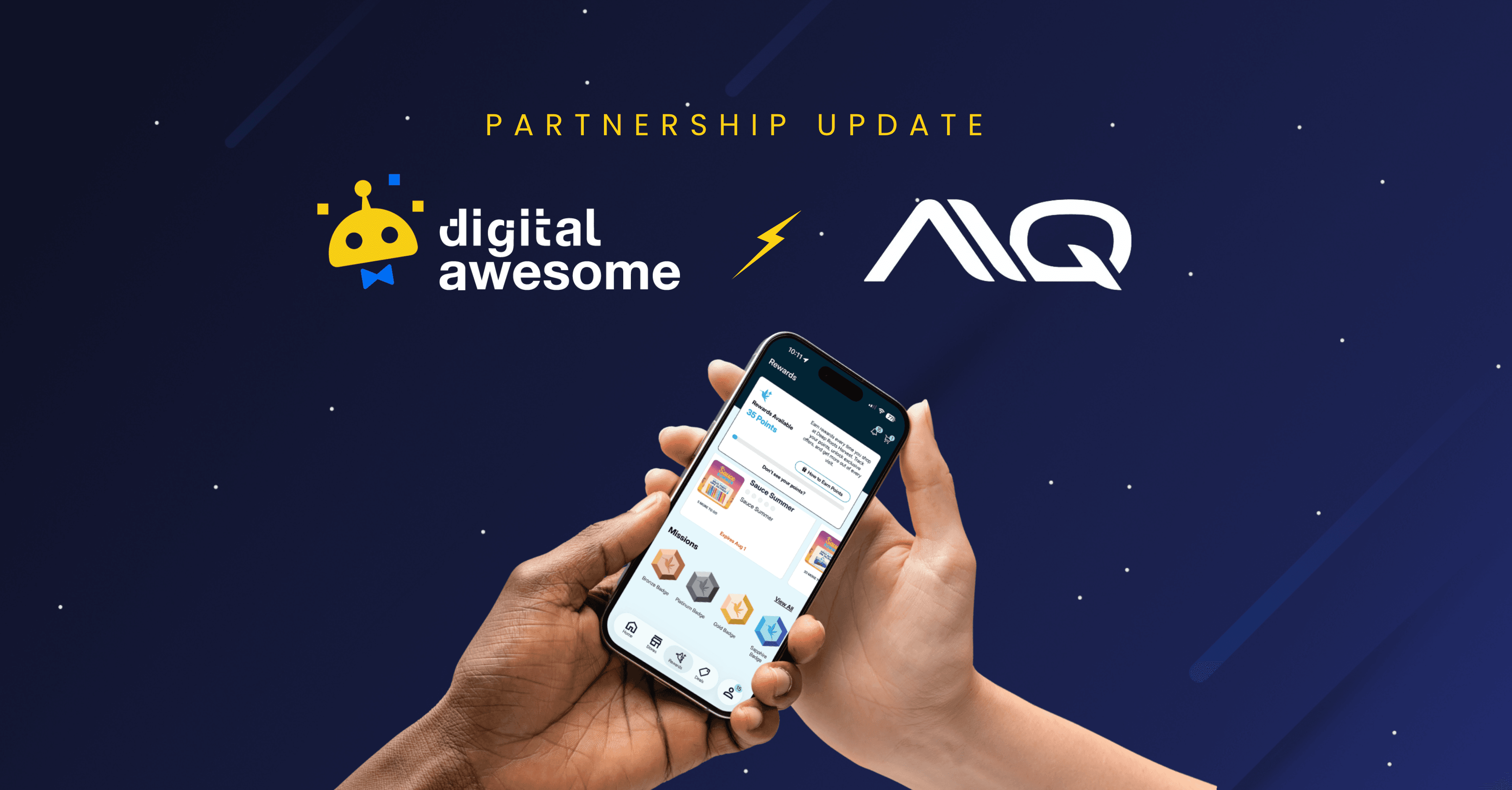
This is the concern that stops a lot of dispensaries from even evaluating a change. It should not. A mobile app built to integrate with multiple POS providers, rather than being locked to one, keeps functioning through a POS switch. Digital Awesome's dispensary app is built this way: operators can switch POS, loyalty, or menu providers without disrupting the app or losing existing functionality. The POS decision and the app decision do not have to be the same decision.
That separation matters because the gains tied to the app itself, not the POS underneath it, are significant on their own. Across Digital Awesome's client base: a 60% increase in shopping frequency compared to online and in-store channels, 10.6x weekly visits per user, 48% higher average order size versus in-store, and 97% user retention in the first 90 days. None of that resets when a dispensary changes POS providers, because the app was never dependent on the POS to begin with.
POS for Cannabis Retailers of Any Size
A single-location dispensary and an eight-location multi-state operator are not shopping for the same thing, even if they are both typing "cannabis pos systems" into Google. Smaller operators tend to prioritize simplicity and lower setup overhead. Larger, multi-location retailers need centralized reporting and inventory sync as the non-negotiable requirement.
This plays out in practice. Herbology unified all 8 of its multi-location stores under one app rather than managing each location's tech stack separately. Friends of the Farm did the same across 11 California stores, including Farmacy, The Pottery LA, and Natural Healing Center, unifying loyalty into a single pass usable at any location. Neither case required the underlying POS at each store to be identical, the app layer is what made the multi-location experience consistent for customers.
The upside compounds when the app and POS work well together. A New York dispensary saw in-app average order value of $107 against $84 in-store, a 27% lift, generating $641,000 in app sales in its first month post-launch alone. A multi-state operator running stores across Massachusetts and Ohio converted 80% of app sessions into actual orders, driving over $220,000 in app-driven revenue in 30 days at 9 sessions per user, per week. BASK, a Massachusetts dispensary, saw an even larger lift: in-app AOV of $73.00 against $45.83 in-store, a 59% increase, and 25.8% higher than their own website average. Whichever category you fall into, the POS you choose should also support your ability to increase dispensary sales once the compliance and hardware basics are settled.
Multi-location operators also use the app for more than transactions. Amplify in Ohio, after noticing app customers were already spending 48% more than in-store shoppers, ran friendly download and signup competitions between locations to drive adoption and get budtenders and managers actively involved. As AJ Caraballo, Retail Director of Buckeye Relief, put it: rallying teams around the app is part of what drives higher retention and bigger basket sizes, not just the technology on its own.
Next Steps
How Digital Awesome Works With Your Cannabis POS System, Whichever You Choose
Digital Awesome builds native mobile apps that integrate with the most popular cannabis POS and menu providers, Treez, Dutchie, Jane, Flowhub, Meadow, and POSaBit, without locking you into one. Whichever POS system you land on after reading this guide, switching providers later will not force you to rebuild your app or start over with a new one. Amplify Ohio is a proof point of what this looks like in practice: after replacing their outdated loyalty app, they reached 30% app adoption of total store sales, 48% more sales than in-store, and a churn rate under 5%, all within the first 90 days.
If you are a POS provider or cannabis agency rather than a dispensary, and you want to offer this same flexibility to your own clients, you can become an integration partner.
Frequently Asked Questions
Does Digital Awesome work with Dutchie's POS?
Yes. Digital Awesome integrates with Dutchie as one of its supported POS and menu providers, and the app continues to function if you later switch away from Dutchie to a different provider.
Will I lose customer data if I switch cannabis POS systems?
That depends on your POS provider's data export process, not on your app. An app built independently of your POS, like Digital Awesome's, keeps your loyalty, rewards, and customer engagement data intact regardless of which POS you use.
How long does it take to switch cannabis POS providers?
This varies by provider and by how much historical data needs to be migrated. It is a question best directed to the new POS provider directly, since timelines differ.
Do I need special hardware for a cannabis POS system?
Most dispensaries need a card reader, receipt printer, barcode scanner, and a terminal or tablet. Anything beyond that depends on store size, not a universal requirement.
Can I use Digital Awesome's app if I have not chosen a POS system yet?
Yes. Digital Awesome's app is designed to work with several POS providers, so you can select your POS system independently and connect it once decided.
What happens to my app if my POS provider shuts down or changes ownership?
Because Digital Awesome's app is not built exclusively for one POS provider, a change on the POS side does not mean rebuilding your app from scratch.
7 Essential Resources
Choosing a cannabis POS system ultimately comes down to compliance, since every state with legal cannabis sales requires some form of seed-to-sale or track-and-trace reporting, and your POS has to integrate with whichever system your state mandates. The resources below are official state regulatory sources covering these requirements directly, useful if you want to see exactly what your state expects before comparing providers.
- Georgia Seed-to-Sale Tracking Rules, Chapter 351-5 - Georgia Secretary of State, official tracking system requirements for licensees.
- Colorado Seed-to-Sale Tracking System Presentation - Colorado Department of Revenue, confirms mandatory tracking under C.R.S. 44-10-202.
- Missouri Seed-to-Sale Tracking Certification Rule - Missouri Department of Health and Senior Services.
- New Mexico House Bill 493: Seed-to-Sale Tracking System - New Mexico Legislature, requiring a statewide tracking system.
- Connecticut Seed-to-Sale Tracking Overview - Connecticut Department of Consumer Protection.
- New York Cannabis Control Board December 2024 Release - New York Office of Cannabis Management, licensing and sales milestones.
- California DCC Annual Report, Fiscal Year 2022-23 — California Department of Cannabis Control, licensing and enforcement data.
These are state-specific examples, not a claim that every state's requirements are identical. Check your own state's cannabis regulatory agency for the exact system and rules that apply to you.
3 Statistics
These figures come directly from state cannabis regulatory agencies and give a sense of just how large and tightly tracked this industry has become, which is exactly why the POS you choose needs to handle compliance reporting without friction.
- 261 licensed adult-use cannabis dispensaries were open and operating statewide in New York as of December 2024, with cumulative sales of $918.7 million. Source: New York Cannabis Control Board.
- 1,433 state cannabis licenses were issued in California during fiscal year 2022 to 2023 alone. Source: California Department of Cannabis Control Annual Report.
- Colorado's regulated cannabis industry, valued at $2 billion, operates under a state law mandate (C.R.S. 44-10-202(1)(a)) requiring seed-to-sale tracking for every licensed business. Source: Colorado Department of Revenue.
Ready to see how a POS switch would work with your current app, or how Digital Awesome's app works with the POS you already have? Schedule a demo or calculate your ROI to see the numbers for your store.